
Home / Guides / Spray Foam and Your Mortgage
Spray foam and your mortgage: what is actually going on
Most spray foam mortgage problems come down to one thing: a surveyor cannot see the roof structure through the foam, so nobody can report on it. Removing the foam removes that obstacle. It does not guarantee you a mortgage, and the decision was never ours to make.
Free spray foam removal quote
No obligation. We will take a proper look.
What happens in a survey when there is foam in the roof
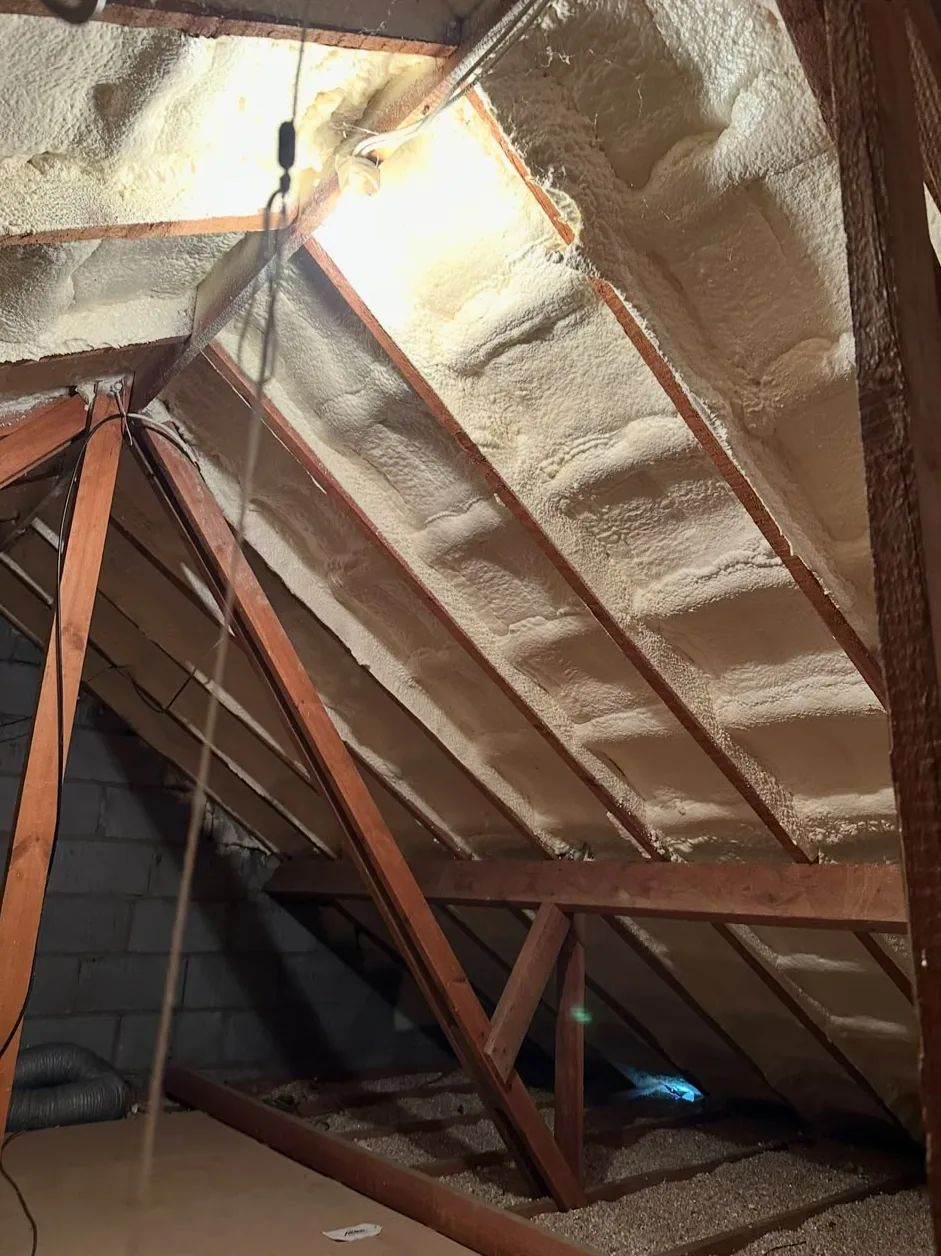
A valuation survey or a homebuyer report includes an inspection of the roof void. The surveyor puts their head through the hatch, looks at the rafters, the purlins, the battens and the underside of the covering, and records the condition. With spray foam sprayed over the timbers and hard against the tiles, there is nothing to look at. The rafters are buried, the battens are buried, and the underside of the covering is buried behind a layer nobody is going to cut into.
So the report does not say the roof is bad. It says the roof structure was not visible and therefore was not inspected. That single line starts the problem, because the surveyor has to flag it and the flag follows the property through the rest of the process. What often comes next is a recommendation for a further specialist report, or a retention held back against the valuation until the roof structure can be seen and reported on properly.
Why lenders react the way they do
A lender is lending against the house as security. If the roof structure has never been inspected, they are being asked to accept an unknown on the part of the building that keeps the weather out of it. Some lenders decline outright. Some lend with a retention. Some want a report from a roofing contractor or a structural engineer before they go any further. Policies differ from lender to lender and they change, which is exactly why your broker is the person to ask, not a roofer and not a website.
There is a second reason and it is the one people miss. Closed cell foam sprayed onto the underside of the tiles stops the roof breathing. Moisture that used to dry out now sits against the timber instead, and rafters rot from the top down where nobody sees them. A lender is not only worried about what has not been inspected. They are worried about what the foam has been quietly doing to that roof for the last ten years.
A foam problem and a timber problem are two different things
Stripping the foam off solves the first one. Once the covering is lifted and the foam is broken out, every rafter, purlin and batten is in plain sight, and the roof void becomes something a surveyor can put their head into and report on. That obstacle is gone for good. What the strip does not do is change the condition of whatever it uncovers. If foam has been holding moisture against that timber for a decade, some of it is going to be soft, and taking the foam away does not make it sound again.
This is why the work is a roofing job and not an insulation job. Anything rotten gets cut out and replaced while the roof is open, then new breathable membrane and new treated battens go on before the tiles go back. You finish with a roof void that ventilates and timber that is sound, both of them recorded in writing and in photographs taken before anything was covered back over. The full scope is set out on our spray foam removal page.
What removal changes, and what it does not
Removal changes one thing precisely. It turns a roof that nobody has inspected into a roof that anybody can inspect. The line in the survey saying the structure was not visible has no reason to appear again, and the property stops carrying an unanswered question about the part of it a lender cares most about. That is the obstacle which stalled your sale, and it is removed properly rather than argued around.
What it does not do is guarantee anything. It does not guarantee a mortgage offer, it does not guarantee a valuation figure, and it does not guarantee that a surveyor signs the roof off. Those decisions belong to the lender and the surveyor, every single time, and no roofer anywhere is in a position to promise them on somebody else's behalf. Any firm implying otherwise is selling you something they do not control. What we control is the work and the evidence of it.
What a surveyor wants to see afterwards
Two things. A roof void they can inspect, and a clear record of what was done. The first takes care of itself once the foam is gone. The second is paperwork, and it is the part people get wrong, because there is no official certificate for this work and no body issues one. What exists instead is evidence: photographs of every timber taken once the covering was off, a written scope saying what was removed and what went back, and the materials used.
We photograph the timbers as a matter of course on every spray foam job, before the new membrane goes anywhere near them. Those photographs are what surveyors ask us for. There is a full breakdown of the documents to expect, and the ones to ask any firm for before they start work, in our guide to spray foam removal paperwork.
If you are mid sale and the clock is running
Say so on the first phone call. A stalled sale changes what matters about the job. Scaffold availability, how quickly the roof can be opened, and how fast the photographs and the written scope reach your solicitor all move up the list ahead of everything else. We will tell you honestly on that call whether the timescale you are working to is realistic, before you commit to anything and before you promise a date to a buyer.
Buyers walk when nothing happens and nobody explains why. Keep your buyer, your estate agent and your broker updated with dates rather than reassurance. A start date, a scaffold date and an expected finish date holds a chain together far better than telling everyone it is in hand. You can follow a full job from foam to finished roof on the Norfolk bungalow we stripped, which gives you a realistic sense of what a week on site looks like.
Who to talk to first
Your broker or the surveyor, before anyone starts quoting. Ask the broker what this particular lender wants to see, and whether the application survives a retention while the work is carried out. Ask the surveyor what they need in order to inspect and report. Then you are commissioning work against a known requirement rather than guessing at one, and you are not paying for anything the lender never asked for in the first place.
When you do speak to a roofer, know which foam you have got, because it changes the method and the timescale. Our guide on open cell vs closed cell foam shows you how to tell from the loft hatch in about a minute. And if you want to understand the money before you take a single quote, the breakdown in our guide to spray foam removal cost shows you what an honest one contains.
What to have ready before you speak to a roofer
- The exact wording from the survey or valuation that flagged the roof
- Whatever your lender or broker has asked for, in writing
- Photos of the loft from the hatch, including the underside of the covering
- Whether the foam is open cell or closed cell, if you already know
- Roughly when it was installed and by whom, if you have the paperwork
- Your deadline, including any exchange date the chain is working to
- Whether the work has to be finished before exchange or before completion
Common questions
Will removing the spray foam get my mortgage approved?
My buyer's survey flagged the foam. What happens now?
Can I sell the house without removing the foam?
Does it matter whether it is open cell or closed cell?
How long does the work take?
Get a free written quote and a timescale you can give your buyer
Ring 01603 858560 with your postcode, the wording from the survey and any photos of the loft you have taken. We are based in Norwich and travel across the UK for spray foam work. The quote is free and in writing, there is no call-out charge, every timber gets photographed once the covering is off, and the workmanship carries a 10-year guarantee.
Get my free quote